Views: 0 Author: Site Editor Publish Time: 2026-11-26 Origin: Site
A dough dividing and moulding system is one of the most important sections in an automatic bakery production line. It converts bulk dough into controlled portions and then gives those portions the shape, orientation and surface condition required for proofing, baking and packaging.
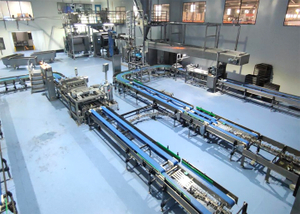
At AOCNO, we do not treat dough dividing and moulding as isolated machines. We configure the dough-handling section around the recipe, target piece weight, product format, production rate, proofing method and downstream equipment. The divider, rounder, intermediate proofer, moulder, conveyor and pan or tray handling system must operate as one coordinated process.
Dough dividing is the process of portioning bulk or large quantities of dough into individual pieces with a defined target weight. Dough moulding is the subsequent process of shaping those pieces into the geometry required for the finished product.
In a typical industrial bread process, dough dividing is part of the makeup stage. The makeup sequence may include dividing, rounding, intermediate proofing, sheeting and moulding.
At AOCNO, we select the combination according to the product format, dough properties, target capacity, factory layout and downstream process.
Rounding creates a more uniform shape and surface before intermediate proofing or final forming. For hamburger buns and rolls, the rounder must be matched to the dough formulation, piece weight, target diameter, surface condition and required production speed.
If rounding is insufficient, dough pieces may enter proofing with irregular geometry, visible seams or uneven surface tension. If the mechanical action is too aggressive, the dough may be overworked or lose the structure developed during mixing and fermentation.
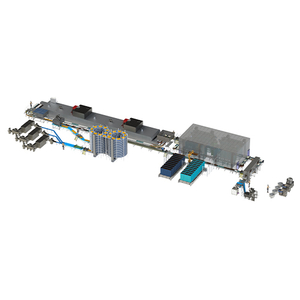
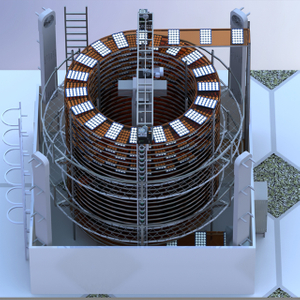
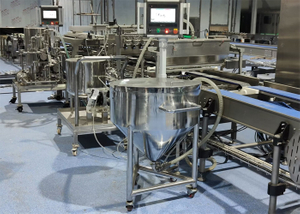
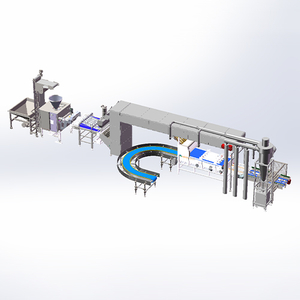
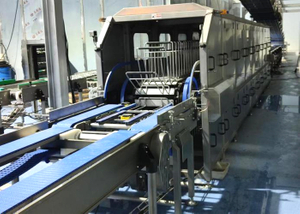
AOCNO can configure bun and roll makeup systems that connect dough delivery, multi-channel dividing, rounding, intermediate proofing and turning conveying. The equipment arrangement can be adapted to the customer's product, capacity target, factory conditions and layout.
Pan bread often requires a more complex makeup sequence. After dividing and rounding, the dough may pass through intermediate proofing, sheeting, curling and moulding before it is placed in the pan.
Sheeting gradually flattens the dough piece. Curling and moulding then create a cylindrical or loaf-type piece that fits the pan. The settings must be matched to dough-piece weight and condition, because unsuitable roll gaps or pressure can damage the dough, create uneven layers or produce inconsistent loaf geometry.
At AOCNO, we provide dough handling, dividing and moulding configurations for toast and loaf-bread applications.
Hot dog rolls and other elongated products require forming and conveying equipment that preserves length, symmetry, orientation and spacing. The dough must be shaped without excessive compression and transferred through proofing and baking without losing its geometry.
Baguettes and other long products require equipment that can handle elongated dough pieces without bending, sticking or changing their surface tension. The forming section must be coordinated with proofing support, oven loading, cooling transfer and package length.
For long products, transfer points deserve particular attention. Tight bends, unsuitable guides or excessive compression can change length and shape before proofing. Inconsistent support can also create differences between lanes.
A dough dividing and moulding system supports product consistency through several connected controls.
Accurate portioning creates a stable starting point for every subsequent process. It helps maintain finished weight, pan loading, proofing behavior, baking loss and package count.
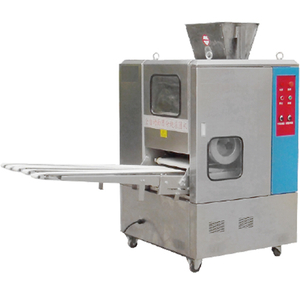
AOCNO's high-precision dough divider range uses vector screw extrusion technology. AOCNO lists a dividing deviation of no more than 1% for the applicable high-precision system.
Dough structure is created during mixing and fermentation. Excessive pressure, compression or mechanical handling during dividing and moulding can affect the structure and create irregular pieces.
AOCNO provides a vacuum-screw dough divider designed for gentle, oil-free division. The listed system uses a vacuum exhaust system, a built-in vacuum pump and 304 stainless-steel construction.
Rounding and moulding should produce pieces with consistent length, diameter, height, surface condition and orientation. Consistent geometry helps the proofer, oven, cooling system, slicer and packaging equipment operate within a predictable window.
• Define the product before selecting the machine:Confirm whether the system will produce loaf bread, toast, buns, rolls, hot dog rolls, pizza dough, baguettes or other products. Record the dimensions, piece weight, finished weight, shape, surface condition, pan or tray format and package format.
• Define the dough process:Provide the recipe or key dough characteristics, including hydration, flour strength, fat and sugar levels, yeast level, fermentation method, target dough temperature and expected dough elasticity.
• Match the divider range:Select a divider whose practical range covers the target piece weight without forcing the machine to operate at an unsuitable extreme. Confirm how dough density, temperature, feeding pressure and speed affect accuracy.
• Match the moulding route:Decide whether the product needs rounding only, rounding followed by intermediate proofing, sheeting and moulding, bun makeup, long-product forming or another combination.
At AOCNO, we provide dough dividers, vacuum-screw dividing systems, dough rounders, moulders, intermediate proofing configurations, conveying sections and complete dough-handling systems for automatic bakery production lines.
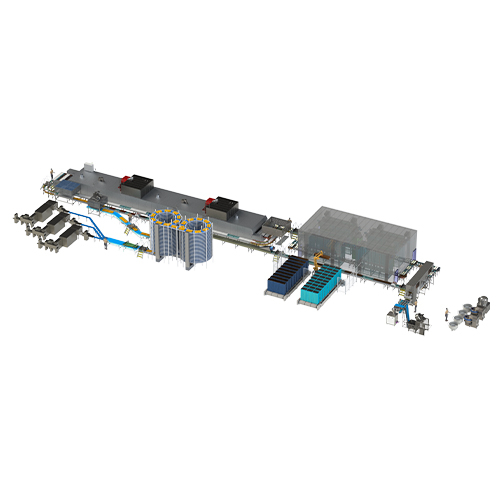
We configure the equipment around the customer's product, recipe, target piece weight, required capacity and factory conditions. For bun applications, AOCNO provides line configurations that can integrate dough pumping, belt conveying, multi-channel dividing, rounding, intermediate proofing and turning conveying. For toast and loaf products, we plan the relationship between dividing, rounding, sheeting, moulding, pan loading, proofing, baking, cooling and slicing.
Our objective is not simply to supply a fast divider or a high-output moulder. It is to help the bakery create a repeatable dough-handling process that supports product consistency, practical capacity, responsible material use and long-term operation.
How accurate is an AOCNO dough divider?
AOCNO lists a dividing deviation of no more than 1% for its applicable high-precision vector screw extrusion system. This is a manufacturer-stated reference specification. Actual performance must be confirmed using the customer's dough, operating conditions and agreed measurement method during testing or commissioning.
What dough-piece weight range can AOCNO bun dividers handle?
AOCNO's listed bun-divider configurations cover approximately 26–200 g dough pieces. The achievable accuracy and output depend on the selected model, dough formulation, temperature, feeding conditions, speed, product spacing and commissioning results.
What is the reference output of AOCNO's bun dividing configurations?
AOCNO lists a four-channel configuration at approximately 8,000–28,000 pieces per hour and a six-channel configuration at approximately 14,000–36,000 pieces per hour. These are reference ranges for the listed configurations, not universal guarantees for every recipe or product.
Can a dough divider and moulder be integrated into a complete bread production line?
Yes. Integration requires compatible output, conveyor pitch, product orientation, tooling, intermediate proofing time, control signals, pan or tray format and downstream capacity. AOCNO evaluates these interfaces when configuring a dough-handling system.
Add: No.19,Jingwu Road,Anping County,Hebei,China
Whatsapp/Wechat: 0086 15127880005
E-Mail: info@aocno.com