Views: 0 Author: Site Editor Publish Time: 2025-12-02 Origin: Site
In industrial baking, the type of oven directly determines the thermal response and final quality of the product. Tunnel ovens and deck/cradle ovens differ fundamentally in heat transfer methods, temperature uniformity, and temperature control response, and different types of baked goods exhibit varying sensitivities to these differences. This article explores these differences from three perspectives: thermodynamic mechanisms, process performance, and practical suggestions, to help you choose the optimal baking solution for different products.
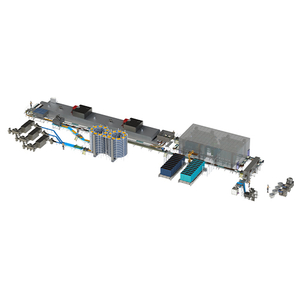
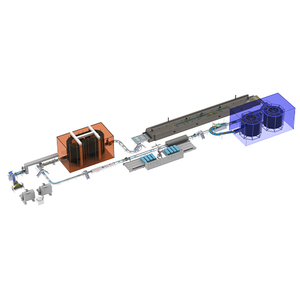
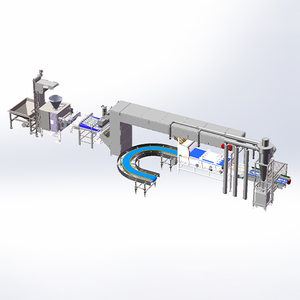
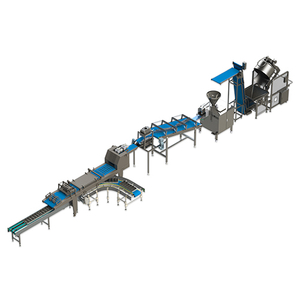
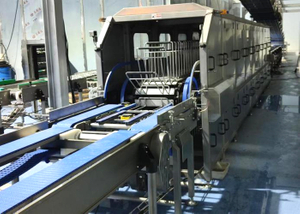
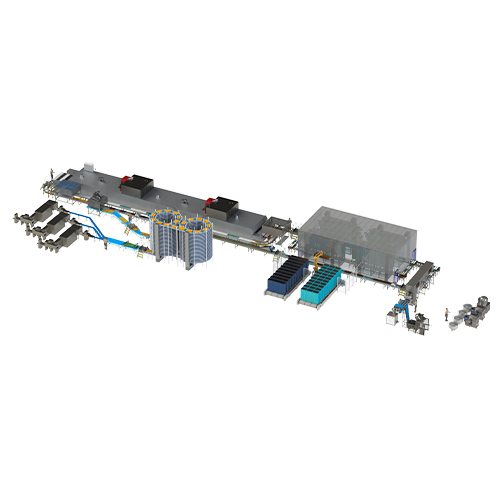
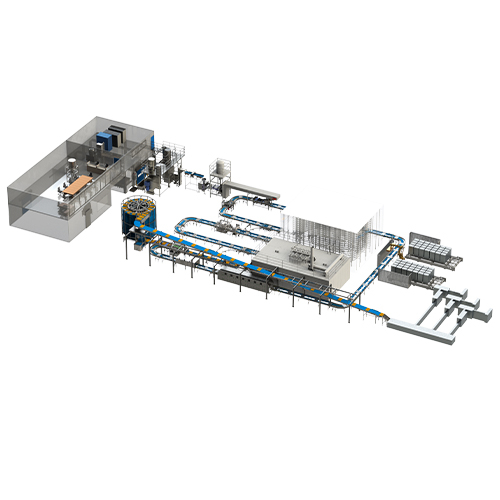
Tunnel ovens primarily utilize continuous conveying and forced convection hot air. Hot air circulates within the furnace chamber via fans and is temperature-controlled in zones, achieving high-efficiency heat transfer and making them suitable for mass production. Cradle ovens, on the other hand, often employ a layered furnace chamber combining radiation and convection, with single-pan or segmented intermittent heating, making them suitable for products with extremely high requirements for appearance and taste.
Soft-pack pastries are sensitive to surface gloss, internal moisture retention, and structural collapse. Tunnel ovens, through low-temperature, long-duration zoning and adjustable airflow, can achieve continuous and stable production. Cradle ovens, with their higher heat radiation content and gentler heating, are beneficial for the uniform solidification and volume stability of butter and filling products, making them suitable for small-batch, high-end production.
Cookies require uniform browning, a crisp texture, and low residual moisture. The strong convection of a tunnel oven facilitates rapid dehydration and uniform browning, especially on a multi-layer conveyor line where precise browning can be controlled through zoned temperature gradients. Cradle ovens, due to their uniform heat distribution, are suitable for handcrafted cookies where extremely high browning standards are required.
Cakes emphasize a light and fluffy texture and even expansion. Therefore, it is often recommended to use low fan speeds, zoned heating, or add a static zone in a tunnel oven for cakes. The gentle radiant heating of a cradle oven is more conducive to the even expansion and soft texture of the cake, especially in the early stages of baking when it is more favorable for temperature gradient control.
"Baking" is merely the result; achieving a stable internal structure, ideal moisture distribution, and consistent appearance depends on a deep understanding of thermodynamic differences and meticulous management of process parameters.
AOCNO offers process matching consultation, parameter tuning, and pilot production support for tunnel ovens and cradle ovens, helping baking companies achieve the optimal balance between capacity and quality through scientific processes. Contact us for professional technical services.
Add: No.19,Jingwu Road,Anping County,Hebei,China
Whatsapp/Wechat: 0086 15127880005
E-Mail: info@aocno.com