

Views: 0 Author: Site Editor Publish Time: 2026-06-09 Origin: Site
For enterprises currently building new baking facilities, expanding production bases, or upgrading automation capabilities, a common question arises:
Should one purchase individual pieces of baking equipment, or invest directly in a complete automated bread production line?
On the surface,purchasing individual machines appears to offer lower investment costs and greater flexibility, whereas a complete production line entails a higher initial budget. However, when considering long-term operating costs, production efficiency, product consistency,and future scalability,the value proposition of the two approaches differ significantly.
So, which option is better suited for baking facilities of varying scales?
In modern industrial baking,equipment investment typically accounts for a significant portion of the factory construction budget.
Equipment selection not only impacts product quality consistency, production efficiency, labor costs, energy utilization, and future expansion capabilities, but also directly determines the enterprise's competitiveness over the next 5 to 10 years. Therefore, procuring equipment is not merely about purchasing machinery; it is about charting the company's future development path.
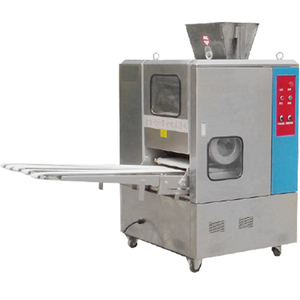
The standalone equipment approach involves an enterprise purchasing individual units—such as a spiral mixer, dough divider, dough moulder, bakery proofer, bakery oven, and bread slicer—based on its specific operational needs.These machines typically operate independently, with manual labor handling the transfer of products between processing stages.
• Lower initial investment: For enterprises with limited budgets, purchasing standalone machines allows for phased capital investment.
• High flexibility: Enterprises can adjust their equipment configuration based on product changes. For example, production lines can be flexibly configured for items such as sliced bread, hamburger buns, or baguettes.
• Suitable for small-scale production: For factories with lower daily output, a standalone machine setup is often sufficient to meet requirements.
Note: As order volumes grow, the drawbacks of the standalone production model will gradually become apparent—including rising labor costs, inconsistent product quality, and difficulties in scaling up production.


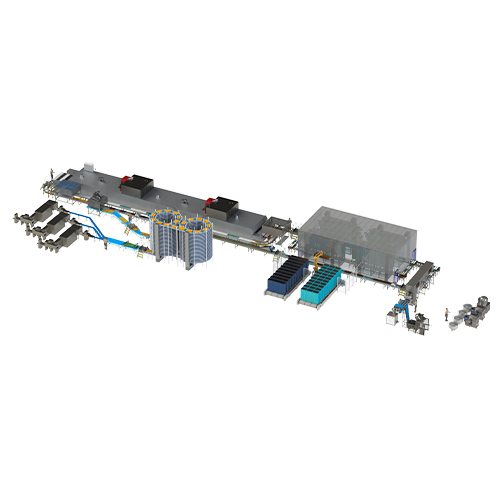
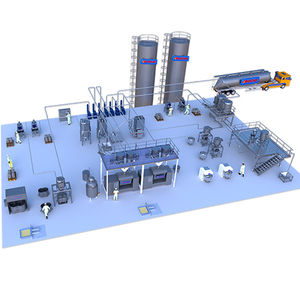
A complete production line integrates all manufacturing processes into a continuous, automated system.
The typical workflow includes raw material dosing → dough mixing → dividing → rounding → shaping → proofing → baking → cooling → slicing → packaging. The entire process is automatically linked by a conveyor system.
• Higher Production Efficiency:Automated system enable continuous production, reducing downtime and increasing output per unit of time—making them particularly suitable for medium-to-large-scale factories.
• Reduced Reliance on Manual Labor: Automated production lines handle repetitive tasks, thereby significantly lowering labor costs.
• Consistent Product Quality: The line utilizes PLC systems to centrally control parameters such as temperature, humidity, conveying speed, and baking settings, ensuring consistency across every batch.
• Food Safety Management: Automated equipment minimizes manual handling, helping to meet the requirements of food safety standards such as HACCP, GMP, and FDA regulations.


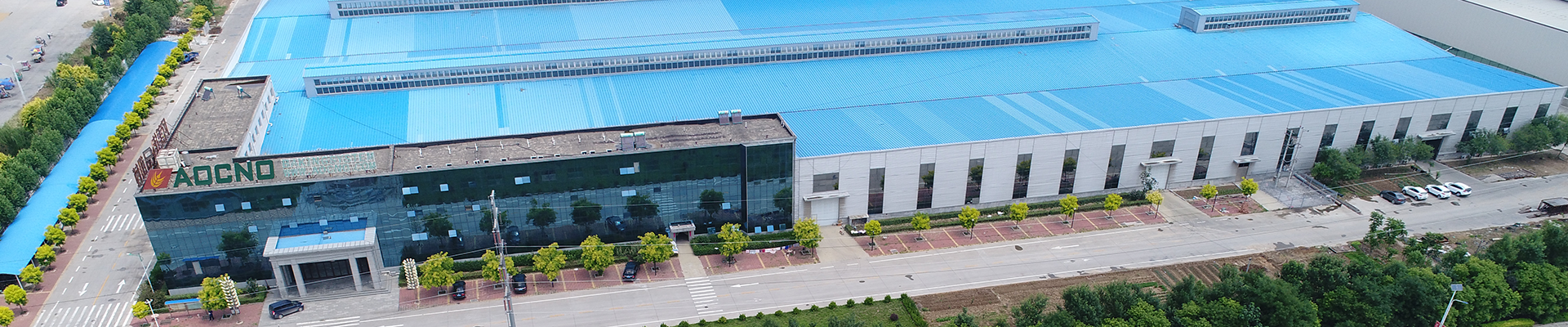
As a professional manufacturer of baking equipment, AOCNO offers not only standalone machines but also complete, automated bread production line solutions.
• Standalone equipment solutions: Includes spiral mixers, dough dividers, dough moulders, proofers, bakery ovens, and bread slicers—ideal for small to medium-sized projects.
• Automated production line solutions: Covers production lines for toast, hamburger buns,baguettes,and Danish pastries, helping businesses achieve automation upgrades.
• Customized factory planning: Provides comprehensive equipment planning based on the client's product type, target production capacity, factory layout, and investment budget.
Q: Can a standalone unit be upgraded into a production line later?
A:Yes,though equipment compatibility issues may arise in some cases. Therefore, comprehensive planning at the initial stage is recommended.
Q: How do I determine which solution is right for me?
A:We recommend focusing your analysis on current daily output, growth targets for the next 3-5 years,and product types before formulating an equipment procurement plan.
When formulating equipment procurement plans, it is advisable to consider long-term operating costs, potential for automation upgrades, and future market demand, rather than focusing solely on the purchase price.
Contact AOCNO today for a tailored baking factory solution that makes your production more efficient, intelligent, and competitive.