Views: 0 Author: Site Editor Publish Time: 2026-08-25 Origin: Site
For an industrial bakery, extending production from one shift to two or three shifts can increase capacity without building an entirely new facility. However, higher utilization also exposes weaknesses in manual processes. Dough temperature may vary between teams, proofing settings may be adjusted differently, and equipment handovers may create delays or quality deviations. The result can be inconsistent loaf weight, volume, crumb structure, crust color, and packaging performance.
A reliable bread production line for multiple shifts must therefore do more than move products from one machine to another. It must create a repeatable process that can be operated, monitored, cleaned, and maintained throughout the production day. AOCNO's automated bread production line is designed around this principle.
This article explains how AOCNO supports consistent output across multiple shifts and what bakery managers should evaluate before investing in industrial bread production equipment.
Multi-shift inconsistency rarely has a single cause. It usually results from the interaction of people, ingredients, equipment, and environmental conditions. Common sources include inconsistent recipe execution, manual weighing, different machine adjustments, changes in proofing-room conditions, incomplete shift handovers, and delayed maintenance.In a high-volume bakery, these differences may affect an entire production batch before the problem is identified.
Automation does not eliminate the need for trained operators or documented procedures. Instead, it provides a more controlled technical foundation in which approved recipes, operating parameters, inspection points, and maintenance routines can be applied consistently by different teams.
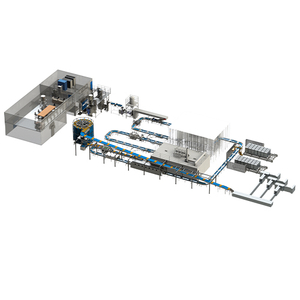
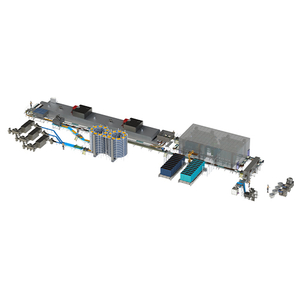
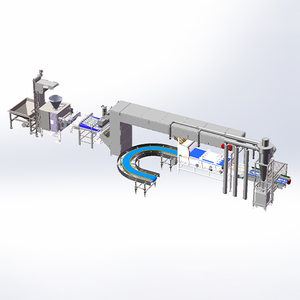
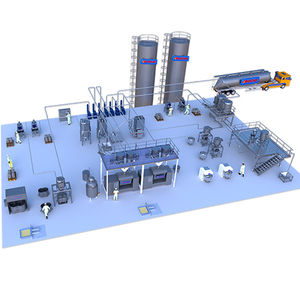
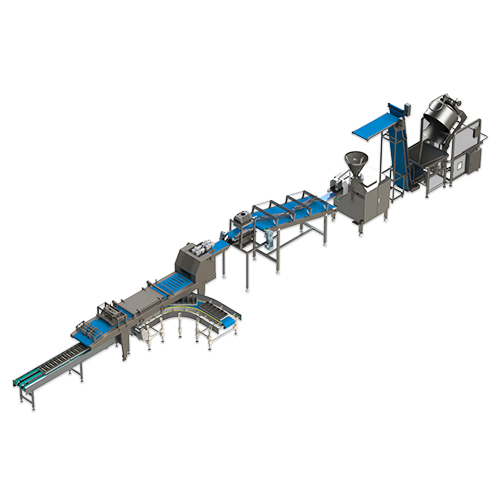
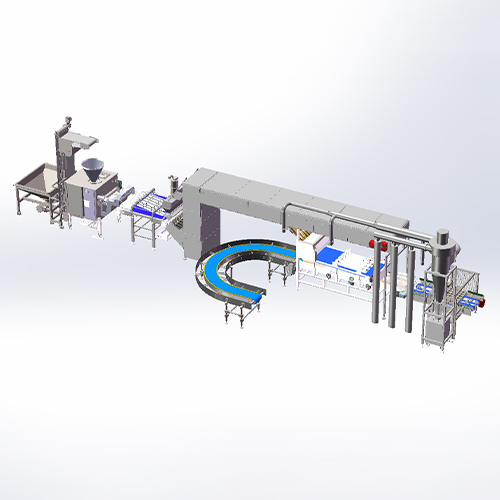
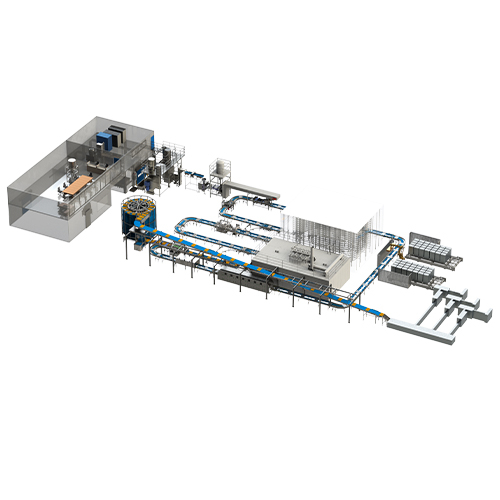
AOCNO's bread production line can connect the principal stages of industrial bread manufacturing, including ingredient metering, dough mixing, dividing, shaping, proofing, baking, cooling, slicing, and packaging. It also makes it easier for production managers to identify where a deviation occurs.
The exact equipment configuration should be selected according to the product, factory layout, target capacity and dough characteristics. AOCNO states that it provides customized equipment combinations and layout planning for these requirements.
AOCNO's intelligent bread production line uses control systems that can monitor and adjust key parameters such as temperature, humidity, and fermentation time in real time. These controls are particularly valuable when production continues across multiple shifts, because they reduce dependence on individual operator judgment.
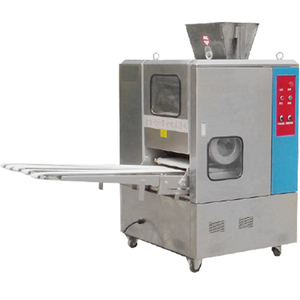
Output consistency across shifts begins with the dough. If dough development is unstable at the mixing stage, downstream equipment cannot fully correct the variation. AOCNO's equipment portfolio includes dough mixing systems designed to create a consistent dough base, while automated dividing and shaping equipment helps standardize portion size and product form.
Proofing is one of the most sensitive stages in bread production. Fermentation responds to temperature, relative humidity, dough condition, yeast activity, and residence time. AOCNO's continuous proofing systems that regulate temperature and humidity and maintain a uniform dough flow in a controlled environment. This supports repeatability by reducing the effect of changing room conditions and inconsistent manual timing.
However, The appropriate proofing temperature, humidity, and dwell time must be confirmed during commissioning and monitored during production.
AOCNO's bread production line solutions include baking systems designed for controlled heating and continuous production. When oven settings, belt speed, and product loading are controlled, each shift has a defined operating baseline. Quality teams can then compare crust color, internal moisture, volume, and bake loss against an established standard.
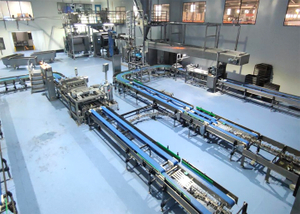
A loaf that leaves the oven with the correct appearance can still experience quality problems during cooling, slicing, or packaging. Insufficient cooling may cause condensation or slicing deformation, while unstable conveying can create spacing and product-handling problems.
AOCNO offers cooling systems, including spiral cooling solutions, as part of its broader bakery equipment ecosystem. When these stages are integrated, operators can reduce manual handling and establish a more predictable product flow between baking and dispatch.
For bakeries supplying retailers, foodservice operators, or distribution networks, stable final handling is also important for order accuracy. Consistent slice thickness, package presentation, and product count make it easier to meet customer specifications across every shift.
Preventive maintenance supports consistency in two ways. First, it reduces the probability of unplanned stoppages that interrupt production schedules. Second, it helps prevent gradual performance deterioration.
Maintenance planning should distinguish between daily operator checks, scheduled technical inspections, and replacement of wear parts. It should also define lockout and safety procedures, cleaning responsibilities, spare-parts availability, and escalation contacts. A production line can only support multiple shifts reliably when maintenance is treated as part of production planning rather than as an emergency response.
Consistent output across multiple shifts requires a coordinated combination of equipment, process control, operator training, shift handover, sanitation, maintenance, and quality verification. AOCNO's automated bread production line supports this objective by integrating core production stages, controlling key parameters, reducing unnecessary manual handling, and offering configurable solutions for different factory requirements.
To learn more about baking equipment, please check out AOCNO's [Baking Equipment List].
How does AOCNO help maintain the same bread quality between shifts?
AOCNO supports repeatability through integrated equipment and control of important parameters such as dough weight, temperature, humidity, fermentation time, baking temperature, and conveying conditions. These controls should be combined with approved recipes, standard operating procedures, quality checks, and formal shift handovers.
Which equipment is most important for consistent multi-shift bread production?
Consistency depends on the complete process rather than a single machine. Core equipment typically includes a dough mixer, divider, rounder or moulder, proofer, oven, cooling system, slicer, and packaging system. The correct configuration depends on the bread type, dough properties, product weight, target output, and factory layout.
Can AOCNO customize a bread production line for a specific factory?
AOCNO states that it can customize equipment dimensions, production capacity, equipment combinations, layout schemes, and bread-making processes according to customer requirements. Buyers should submit detailed information about products, piece weights, target output, factory space, utilities, hygiene requirements, and future expansion plans.
How to Improve Hygiene and Process Control with AOCNO Bread Production Line
How AOCNO Bread Production Line Supports Consistent Output Across Multiple Shifts
How to Design a Modern Bakery Factory Using AOCNO Bakery Equipment
What Makes an AOCNO Automation Bread Production Line the First Choice for Food Manufacturers
Should You Buy Individual Bakery Machines or a Complete Production Line?
How To Choose The Right Automatic Bread Production Line for Your Bakery
How Does a Dough Mixer Work in Industrial Baking Production Lines?
Industrial Bakery Ovens:Electric,Gas,or Diesel?A 2026 Comparison By AOCNO
On-Site Installation and Staff Training:What to Expect When Partnering with AOCNO
Add: No.19,Jingwu Road,Anping County,Hebei,China
Whatsapp/Wechat: 0086 15127880005
E-Mail: info@aocno.com